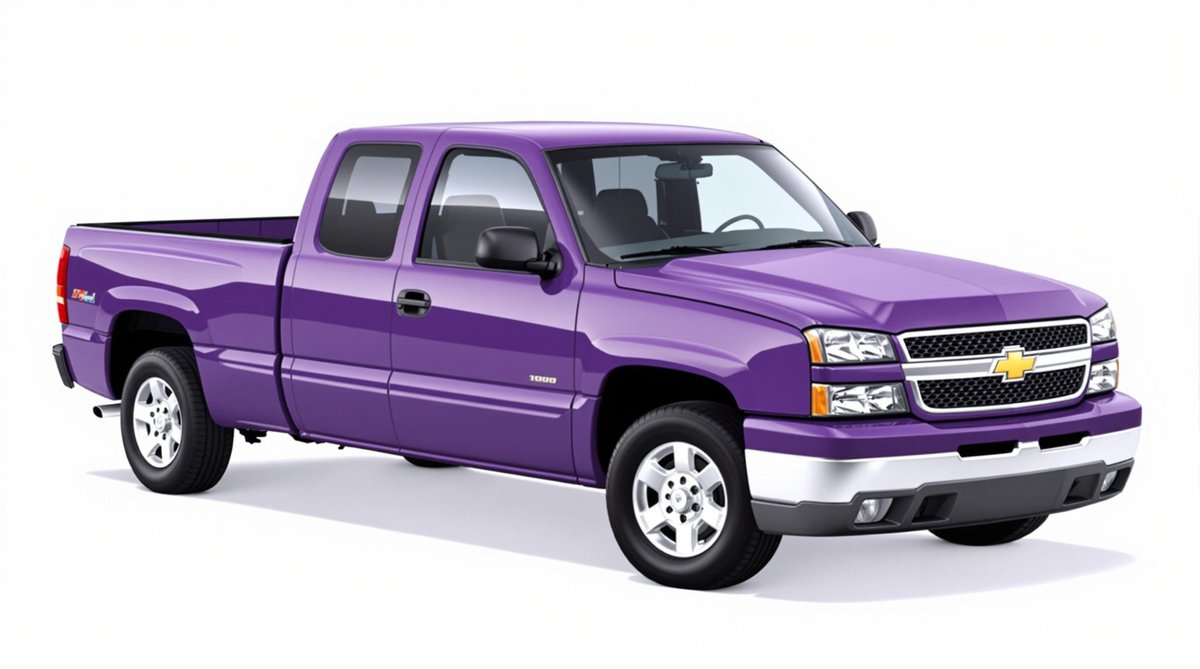
The year is 1999. Y2K fears are still simmering, "The Matrix" is dominating the box office, and on the showroom floors, a new king is about to be crowned in the full-size pickup segment. We're talking about the First Generation Chevy Silverado (1999-2007), a truck that didn't just meet expectations; it set them. Built on GM's robust GMT800 platform, this era of Silverado, along with its GMC Sierra sibling, quickly established itself as the benchmark for capability, comfort, and enduring reliability. More than two decades later, these trucks aren't just old iron; they're bona fide classic pickups, still serving faithfully and loved by a passionate community.
So, why does this particular generation still hold such a strong appeal? Let's dive into what made the GMT800 Silverado an instant icon and why it continues to be a smart, if nostalgic, choice today.
At a Glance: The First Generation Silverado (1999-2007)
- Platform: GMT800, shared with GMC Sierra.
- Years: 1999-2007 (2007 models often called "Classic").
- Key Strengths: Durable powertrains (Vortec V6/V8s, Duramax diesel, Allison transmission), immense versatility, widespread parts availability, strong aftermarket support.
- Major Revisions: 2003 refresh (interior, front end), 2006 (grille/hood).
- Special Editions: Silverado SS, GMC Sierra Denali, Vortec Max, Parallel Hybrid Truck (PHT).
- Capabilities: Ranged from light-duty half-tons to heavy-duty 3500 dually models with impressive towing and payload.
- Enduring Legacy: Praised for longevity, practical design, and a comfortable ride for its era.
Why the First Gen Silverado Still Rules: A Legacy of Toughness and Comfort
For many, the 1999-2007 Silverado represents the sweet spot of modern truck design. It offered a significant leap forward from the GMT400 C/K trucks it replaced, blending a more refined ride and updated amenities with the undeniable work ethic Chevy trucks were known for. General Motors invested heavily in the GMT800 platform, with development starting in January 1993 and design finalized by mid-1995, ensuring a well-engineered product from the outset.
These trucks hit showrooms in August 1998 as 1999 models, initially alongside "classic" GMT400 light-duty trucks for a year, and heavy-duty GMT400s until 2000. The transition was smooth, and buyers quickly embraced the new platform's capabilities and looks. It’s this blend of workhorse DNA and everyday usability that cemented its status.
A Deep Dive into the Models: More Than Just a Truck
The first generation Silverado and Sierra offered an incredible array of configurations, ensuring there was a truck for nearly every need and budget.
The Foundation: 1500 & 2500 Light-Duty Models
From the basic work truck to the well-appointed LT, the light-duty models (1500 and 2500) formed the backbone of the lineup. Buyers could choose from three cab styles: a traditional 2-door regular cab, a 3- or 4-door extended cab, and from 2004, a full front-hinged 4-door crew cab. This flexibility extended to the cargo beds as well, with options for a 69.2-inch short box, a 78.7-inch standard box, and a lengthy 97.6-inch long box.
Trim levels included the utilitarian Base/SL, the popular LS/SLE, and the more luxurious LT/SLT. For those who ventured off the beaten path, the Z71 off-road package was a popular addition on 1500 4x4 models, featuring specialized 46mm gas-charged shock absorbers, robust jounce bumpers, stabilizer bars, protective skid plates, and a high-capacity air cleaner to handle dusty conditions. Initially, 2500 series light-duty trucks offered gross vehicle weight ratings (GVWR) of 7,200 and 8,600 pounds, providing a solid step up in capability.
Powerhouses Under the Hood: Engine & Transmission Lineup
One of the GMT800 Silverado's greatest strengths was its powertrain lineup, largely featuring the durable and potent LS-based Vortec V8 engines. Initial offerings included:
- 4.3L V6: A capable base engine for lighter tasks.
- 4.8L V8: A popular step up, offering more power.
- 5.3L V8: The most common and arguably the most beloved engine, known for its excellent balance of power, efficiency, and longevity. An E85-capable version became available in 2003.
- 6.0L V8: Available in various states of tune, offering serious grunt for heavier work or performance applications.
These engines were typically paired with a robust 4-speed automatic transmission (the 4L60E for most light-duty models) or, less commonly, a 5-speed manual transmission. For the 2001 model year, all 2500 models gained a torsion-bar front suspension, enhancing handling and load carrying.
Evolution on the Road: Key Updates and Refinements
While the core platform remained consistent, GM continuously refined the Silverado throughout its production run:
- 2001: Saw the introduction of the innovative Pro-Tec Composite Box, a lightweight and highly durable bed option.
- 2003 Refresh: Introduced in 2002, this was a significant update. It brought a redesigned front end, subtle changes to the rear, and a much-improved interior. New audio systems (including optional XM Satellite Radio and Bose sound) and redesigned HVAC controls elevated the cabin experience. An optional Driver Information Center provided crucial vehicle data. This year also saw the introduction of the Work Truck (WT) trim, a no-frills, durable option for commercial buyers.
- 2005: 1500-series trucks reverted to front disc/rear drum brakes, except for the Hybrid and Denali models, which retained 4-wheel discs. Heavy-duty trucks continued with 4-wheel vented disc brakes.
- 2006: The Silverado received another slight revision, adopting the more aggressive grille and hood design previously seen on the 2500HD/3500 models, giving it a tougher look.
- 2007 "Classic": To distinguish them from the all-new GMT900 generation that debuted in the same year, the final GMT800 trucks were affectionately branded "Classic" models. These represent the culmination of years of refinement on the platform.
While overall safety has come a long way, it's worth noting the IIHS gave the Silverado an overall "marginal" score for frontal offset crash tests from 2003, citing structural integrity and dummy control issues. Modern vehicles have significantly advanced safety features and crash structures, so this is a factor for those prioritizing contemporary safety standards.
Special Editions & High-Performance Variants: Beyond the Standard
The first-gen Silverado wasn't just about work; it also offered exciting specialized versions that pushed the boundaries of luxury, performance, and utility.
GMC Sierra Denali: Luxury Meets Capability
Debuting in 2001 (initially as the Sierra C3), the GMC Sierra Denali was GM's answer to the upscale truck market. It packed a powerful 6.0L Vortec 6000 LQ4 V8 engine, producing 325 hp and 370 lb-ft of torque, mated to a robust 4L60E-HD (later 4L65E) transmission. What truly set the early Denali apart was Delphi's innovative Quadrasteer four-wheel steering system, available until 2004. This system dramatically reduced the turning radius, making the large truck surprisingly agile in tight spaces and significantly improving stability while towing heavy loads. With a towing capacity of 10,000 pounds and a hauling capacity of 1,840 pounds, the Denali offered both comfort and considerable capability.
Silverado SS: The Street Performance Beast
For those who wanted a truck that could haul more than just cargo, the Silverado SS arrived in early 2003. Based on the 1500 Extended Cab, this factory high-performance pickup was a true muscle truck. It featured a high-output 6.0L Vortec High-Output (LQ9) V8 engine, cranking out 345 hp and 380 lb-ft of torque, paired with a heavy-duty 4L65E automatic transmission.
Initially, the SS came standard with all-wheel drive, a 4.10 final drive, and 4-wheel disc brakes, complemented by Z60 performance suspension and aggressive 20-inch aluminum wheels. A two-wheel-drive version became available in 2005 for those prioritizing rear-wheel drive antics. In 2006, the limited-edition "Intimidator SS" was released, honoring NASCAR legend Dale Earnhardt, with minor appearance upgrades adding to its collector appeal.
Vortec Max & High Output: Trailering & Power Packages
Beyond the dedicated SS, GM offered performance and capability upgrades through specific packages:
- Vortec High Output (VHO) (code B4V): Introduced in 2004 for Silverado and Sierra 1500 4x2 extended-cab standard-box trucks. This package equipped trucks with the formidable LQ9 6.0L V8 (345 hp, 380 lb-ft), Z60 High Performance suspension, 4L65E transmission, 3.73 rear gear, and an Eaton locking differential. 2005 models received an upgraded 14-bolt 9.5" rear end and 20-inch wheels, further enhancing durability and street presence.
- Vortec Max (NHT) Trailering Package: In 2006, the VHO evolved into the Vortec Max, available on 4x4 and 4x2 models. It retained the potent LQ9/4L65-E powertrain but paired it with the Z85 Handling/Trailering suspension and 17-inch wheels, making it more focused on heavy-duty trailering than street performance. This package boasted an impressive towing capacity of up to 10,800 pounds.
Parallel Hybrid Truck (PHT): An Early Glimpse into the Future
In a surprising move for its time, GM launched the Parallel Hybrid Truck (PHT) in 2004. This "micro hybrid" used a 5.3L LM7 Vortec 5300 V8 engine, augmented by an electric motor integrated into the transmission flywheel housing. This 42-volt system assisted with engine cranking, battery charging, and, most notably, providing accessory power. The PHT featured four 120-volt 20-ampere AC outlets (two in the bed, two in the cab), making it an ideal workhorse for contractors needing on-site power. Initially sold to commercial buyers, it later became available to retail customers in select states and Canada before its discontinuation in 2008.
Heavy Duty: When Work Calls for More Muscle
For serious towing and hauling, the GMT800 platform delivered with its HD lineup, encompassing the 1500HD, 2500HD, and 3500 models. These trucks were engineered to tackle the toughest jobs.
1500HD, 2500HD, 3500HD Explained
The HD variants were introduced for the 2001 model year (with the 3500 arriving later in 2001) and represented a significant step up in capability:
- 1500HD: This model often featured a crew-cab, standard-box configuration with an 8,600-pound GVWR. It typically ran a Vortec 6000 V8 engine (300 hp, 360 lb-ft) paired with the heavy-duty 4L80-E automatic transmission.
- 2500HD and 3500: These were the true beasts of burden. They offered a choice of two legendary powerplants:
- Duramax Diesel V8: A game-changer for heavy-duty trucks, offered in several iterations (LB7: 300 hp, 520 lb-ft; LLY: 310 hp, 605 lb-ft; LBZ: 360 hp, 650 lb-ft). Paired exclusively with the incredibly robust Allison 1000 automatic transmission (initially 5-speed, later 6-speed), this combination became the gold standard for diesel pickups.
- Vortec 8100 V8: A massive 8.1L gasoline V8, producing 340 hp and 455 lb-ft of torque, also mated to the Allison 1000. This engine provided immense gasoline power for those who didn't opt for diesel.
The 3500 models typically featured dual rear wheels (dually) and an even stronger suspension for maximum stability and payload. These trucks are legendary for their durability; a 2016 study by iSeeCars.com notably ranked the Chevrolet Silverado 2500HD as the second longest-lasting vehicle on the road.
Impressive Capabilities:
| Model | Max Towing Capacity | Max Payload Capacity |
| :-------- | :---------------------------- | :---------------------------- |
| 1500HD | 10,300 lbs (4,700 kg) | 3,129 lbs (1,419 kg) |
| 2500HD | 16,100 lbs (7,300 kg) (w/ 8.1L) | 3,964 lbs (1,798 kg) |
| 3500 | 16,700 lbs (7,600 kg) | 5,753 lbs (2,610 kg) |
Note: 4x4 configurations typically reduced capacity by 200–400 lbs.
GMC Sierra Professional: The Contractor's Companion
From 2002 to 2003, GMC offered a limited-edition Sierra Professional, specifically marketed towards contractors and tradespeople. Available as a 1500 or 2500HD Extended Cab Short Box, these trucks were equipped with extra storage solutions, special badging, a standard bedliner, and convenient in-bed power outlets to support job site needs. The 1500 Professional typically came with a 5.3L Vortec 5300 V8 (with a 4.8L optional), while 2500HD Professional models utilized the more powerful 6.0L Vortec 6000 V8.
Living with a First Gen Silverado: What to Expect
Considering a first-generation Silverado today means balancing its proven strengths against the realities of an older vehicle.
Common Strengths: Why They're Still So Popular
- Legendary Powertrains: The Vortec V8s (especially the 5.3L) and the Duramax/Allison combination are renowned for their incredible durability and longevity. Many examples easily surpass 200,000 or even 300,000 miles with proper maintenance.
- Versatility: With a vast array of cab, bed, engine, and drivetrain options, there's a first-gen Silverado for almost any task, from daily commuting to heavy hauling.
- Parts Availability: Given the sheer number of these trucks produced and their shared components with other GM SUVs (like the Tahoe and Suburban), parts are abundant and generally affordable, both new and aftermarket.
- Customization Potential: The aftermarket is flooded with parts for lifting, lowering, enhancing performance, and personalizing the look of these trucks.
- Comfortable Ride: For a truck of its era, the GMT800 offers a surprisingly smooth and comfortable ride, especially in lighter-duty trims, making it a pleasant daily driver.
- Timeless Looks: The styling has aged gracefully, still looking tough and capable without being overly aggressive.
For a deeper dive into how this era fits into the larger lineage, explore our Chevy Silverado generation guide.
Known Weaknesses & Potential Issues: What to Look For
Like any vehicle, the first-gen Silverado has its quirks and common failure points that potential buyers should be aware of:
- Rust: This is perhaps the biggest enemy of these trucks, particularly in areas exposed to road salt. Check meticulously for rust on:
- Rocker panels: The panels below the doors.
- Cab corners: The lower rear corners of the cab.
- Bed supports: The structural members under the truck bed.
- Brake lines: Steel lines running along the frame.
- Fuel Pump Failures: The fuel pump, located inside the fuel tank, is a common failure item. Symptoms include long cranks, stalling, or not starting at all.
- Steering Components: Worn intermediate steering shafts can lead to a "clunking" noise or loose steering feel. Ball joints and tie rods are also common wear items.
- ABS Module Issues: The anti-lock brake system (ABS) control module can fail, leading to an illuminated ABS light and sometimes erratic brake behavior.
- Gauge Cluster Failures: The stepper motors in the instrument cluster commonly fail, causing gauges (speedometer, tachometer, fuel, temperature) to stick, read incorrectly, or stop working entirely. This is a very common issue but often fixable by replacing the stepper motors.
- Transmission Issues: While generally robust, higher mileage 4L60E transmissions can experience issues, especially if subjected to heavy towing or neglect. Look for harsh shifts, slipping, or delayed engagement. The 4L80E and Allison transmissions are significantly more durable.
- A/C System Problems: Issues with the blend door actuators, blower motor resistors, or leaky condensers are not uncommon.
Buying a Used First Gen Silverado Today: Your Checklist
If you're in the market for one of these beloved trucks, here's how to approach your search to find a gem rather than a headache:
- Prioritize Rust-Free Examples: This cannot be stressed enough. A solid, rust-free frame and body are paramount, as rust repair can be extensive and costly. Look under fender flares, inside wheel wells, and along the frame rails.
- Inspect the Powertrain:
- Engine: Listen for any knocking, tapping, or unusual noises. Check for oil leaks around the valve covers, oil pan, and rear main seal.
- Transmission: During a test drive, pay close attention to shifts. They should be smooth and consistent, without harshness or slipping. Check the transmission fluid level and color – it should be red, not dark brown or black, and shouldn't smell burnt.
- Check the Drivetrain: Engage 4x4 (if equipped) to ensure it works properly. Listen for clunks or grinding from the differentials or transfer case.
- Test All Electronics: Verify that all gauges work correctly, the A/C blows cold, windows and locks operate, and all lights are functional. Gauge cluster issues are common but can be negotiated on price.
- Examine the Suspension and Steering: Look for worn ball joints, tie rod ends, and steering components. Listen for clunks or looseness over bumps.
- Review Maintenance Records: A truck with a documented history of regular oil changes, fluid flushes, and service is always a better bet.
- Consider Special Models: If you're looking for performance, capability, or a future classic, target the Silverado SS, Vortec Max, Sierra Denali (especially with Quadrasteer), or the HD models with a Duramax/Allison. These tend to hold their value better and offer unique driving experiences.
- Get a Pre-Purchase Inspection (PPI): Even if you're handy, a professional mechanic specializing in trucks can spot issues you might miss. It's a small investment that can save you thousands.
The Enduring Legacy of a Workhorse
The First Generation Chevy Silverado (1999-2007) is more than just a used truck; it's a testament to robust engineering, practical design, and the American spirit of getting the job done. From its groundbreaking HD models capable of Herculean tasks to its refined luxury variants and outright performance beasts, this generation offered something for everyone.
Today, these trucks continue to roam our roads, serving as daily drivers, workhorses, and beloved project vehicles. Their widespread availability, ease of maintenance, and solid build quality ensure they will remain a relevant and cherished choice for years to come. If you're seeking a reliable, capable, and character-filled pickup that won't break the bank, the GMT800 Silverado is a classic that's still ready for its next chapter.